

Opening a file
The questions that are skipped are the ones that matter
Conflict, identity, safety, jurisdiction, safeguarding and capability, in that order, each answered before the next one opens. No skip path, no save-for-later, no matter number issued until all six are done.
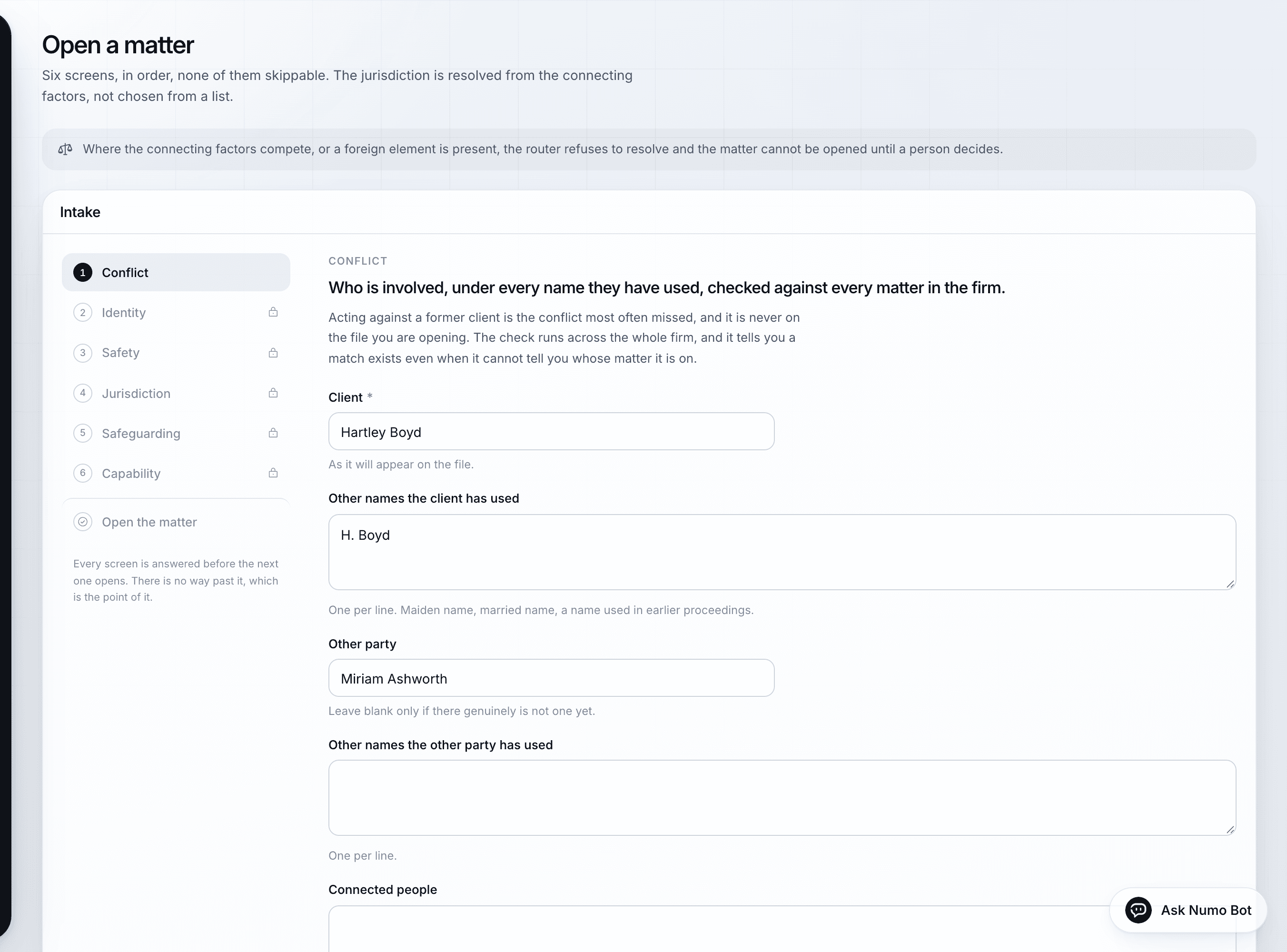
- The conflict check is the search, not the names
- Typing a client’s name does not tick the box. The check runs across every matter in the firm, under every name each person has used, and the screen is not complete until it has run and been cleared.
- Jurisdiction is resolved, not chosen
- Habitual residence, the family home, where the marriage was, where proceedings exist. The router reads the connecting factors and returns an answer. Where they compete, it refuses and says so.
- What was asked stays on the file
- Safeguarding indicators, a politically exposed person, identity evidence still outstanding: each is carried onto the matter, into the morning check, and anywhere the file is summarised.
Conflict
Across the firm, under every name
Acting against a former client is the conflict most often missed, and it is never on the file you are opening. The search covers the whole firm and every name each person has used.
- Maiden names, married names, names used in earlier proceedings
- One per line. A match on a former name is the one that catches the case nobody remembered.
- It tells you a match exists even when it cannot tell you whose
- Where the matter is not one you can see, you are told there is a hit and who is responsible for it, and nothing else. That is enough to make a telephone call and not enough to breach anybody’s confidence.
- Clearing one is a decision, recorded
- A hit that is not a conflict is cleared by somebody who can approve work, with their reason written down. It is not dismissed by whoever happens to be at the keyboard.
Jurisdiction
An answer, or an honest refusal
Three jurisdictions are kept apart everywhere in this product, and the one a matter belongs to decides its vocabulary, its deadlines, its forms and which registers are searched. It is too important to be a dropdown.
- Read from the connecting factors
- Where the client is habitually resident, where the other party is, where the children are, the family home, the place of marriage, and any existing proceedings.
- Competing factors stop the matter
- Where they point different ways, or a foreign element is present, the router refuses to resolve and the matter cannot be opened until a person decides. A confident wrong answer here is worse than no answer.
- It locks the vocabulary
- Once resolved, a draft containing terms from another jurisdiction is blocked before it leaves the firm. A Scottish minute of agreement is not a consent order, and the product will not let the words cross.
The rest
Identity, safety, safeguarding, capability
Four screens that a busy practice skips, and four screens that a regulator asks about. Each records what was actually seen, not that a box was ticked.
- Identity
- Date of birth, current address, what evidence was seen, and where evidence has not been seen, why not and when it will be. A file that never records what was seen cannot be defended two years later.
- Safety
- Risk to the client, risk to a child, whether it is safe to write to an address. It is asked before anything is sent anywhere.
- Safeguarding
- Children involved, their ages, anybody with an indicator on them. These become flags on the matter rather than a paragraph somebody has to remember to read.
- Capability
- Whether the client can give instructions, and what is being done where there is doubt about it.
The limits
What it will not do
It will not open a matter on a guess
An unresolved jurisdiction, an unrun conflict check or an uncleared hit each stop the matter being opened, and each says which screen can fix it. There is no override, because an override is what the six screens exist to prevent.
It is not due diligence
The product records what you saw and when. It does not verify a passport, check a register or form a view on whether the evidence is good enough. That is the firm’s judgement and its regulatory obligation.
See it on your own matters
Half an hour, your own file, and an honest answer about whether this fits how your firm already works.